


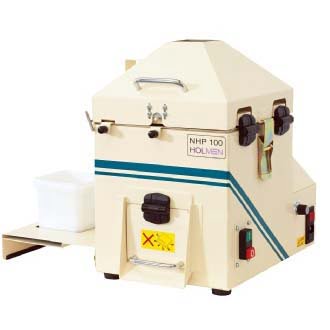
Using a Holmen Pellet Durability Tester to evaluate feed pellet durability offers several practical, technical, and economic benefits compared with more traditional durability testing methods (such as tumbling cans or rotating boxes). The following is an overview tailored for feed manufacturers, quality managers, and process engineers.
Realistic Simulation of Handling Stress
The Holmen tester uses high‑velocity air to propel pellets against a perforated chamber wall. This closely mimics the real-life mechanical stresses pellets experience during:
Conveying (augers, pneumatic lines)
Bin loading and unloading
Truck transport
On-farm handling
Benefit: Results correlate better with actual fines generation in the field than low-energy tumbling methods.
Faster Test Results
A typical Holmen test lasts 30–120 seconds, compared with 10–20 minutes for conventional tumbling durability tests.
Benefit:
Enables rapid quality checks
Supports real-time production decisions
Ideal for process troubleshooting and R\&D trials
This speed is particularly valuable in high-throughput mills or when running formulation experiments.
High Repeatability and Consistency
Holmen testers are designed for:
Fixed air pressure
Controlled test duration
Consistent sample exposure
Benefit:
Reduced operator influence
Improved repeatability between tests
Better comparability between shifts, batches, and facilities
This makes it well suited for quality systems and benchmarking.
Sensitive to Small Quality Changes
The method is highly sensitive to changes in:
Pellet binders
Conditioning temperature and moisture
Die compression ratio
Fat/oil application level
Formula composition (fiber, starch, protein sources)
Benefit: Small improvements—or problems—in pellet quality are detected quickly, which is ideal for:
Process optimization
Ingredient evaluation
Binder performance testing
Minimal Sample Preparation
Only a small pellet sample is required, and preparation is simple:
Pre-Sieve pellets
Weigh sample
Test in Holmen chamber
Calculate Pellet Durability Index (PDI)
Benefit:
Less labour
Faster workflow
Reduced sample handling errors
Excellent Tool for Process Control
Because results are fast and repeatable, the Holmen tester can be integrated into:
Routine in-process checks
Start-up and changeover validation
Continuous improvement programs
Benefit: Operators can quickly adjust:
Steam levels
Conditioning time
Die load or roll settings
before large volumes of off-spec feed are produced.
Reduced Equipment Wear and Maintenance
Compared with mechanical tumbling devices:
No rotating drums
Fewer moving parts
Less mechanical wear
Benefit:
Lower maintenance costs
Longer service life
Consistent performance over time
Widely Accepted and Industry Recognised
Holmen testers are widely used by:
Feed mills
Universities and research centres
Pellet binder suppliers
Integrated livestock producers
Benefit:
Results are widely understood
Easier comparison with industry data
Accepted in technical trials and customer validations
Supports Fines Reduction and Profitability
Improved pellet durability directly contributes to:
Reduced fines in bags and bulk deliveries
Improved feed intake and animal performance
Less feed wastage
Higher customer satisfaction
Benefit: A Holmen tester helps translate pellet quality control into measurable economic value.
Summary
Key benefits of using a Holmen Pellet Durability Tester:
Realistic stress simulation
Very fast test time
High repeatability
Sensitive to formulation and process changes
Easy operation and low maintenance
Strong support for process optimisation and quality control
For additional reading on the topic of pelleting, we can recommend the following detailed article:
Article: – Pellet quality in a compound feed factory – Thoughts from Feed Design Lab


For more information contact TEKPRO today by completing the form below, or email info@tekpro.com
