

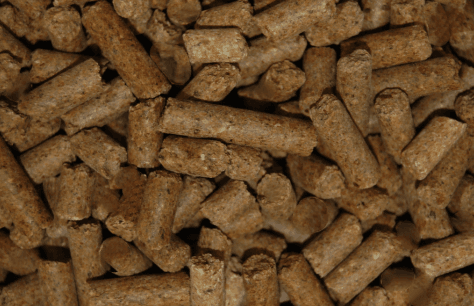
Every feed manufacturer wants durable pellets. Strong pellets reduce fines, travel better through the supply chain and help maintain product consistency from the mill to the feeder.
The challenge is that improving pellet quality often comes with added costs elsewhere in the process…
Many mills invest significant time and resources adjusting particle size, conditioning parameters and pellet mill settings in pursuit of better durability. While these changes can be effective, they can also increase energy consumption, reduce production efficiency and add unnecessary pressure on equipment if not properly evaluated.
The key question is not whether pellets can be made stronger.
The more important question is whether the additional cost required to achieve that strength delivers a worthwhile return.
Balancing Manufacturing and Nutrition
Feed production is an exercise in compromise.
From a manufacturing perspective, smaller particle sizes often support pellet formation and can contribute to more consistent pellet quality. Uniform raw materials generally flow more predictably through the production process and can help achieve tighter quality specifications.
At the same time, feed is ultimately designed for the animal, not the pellet mill.
Poultry benefit from diets that provide a degree of physical structure within the digestive tract. Excessive particle size reduction may simplify manufacturing, but it can also reduce the structural characteristics that support normal gizzard activity and digestive function.
The optimal solution is rarely found at the extreme ends of the spectrum. Feed that is processed solely for manufacturing convenience may overlook the biological needs of the bird, while feed designed exclusively around nutritional theory may create production challenges that impact profitability.
Finding the right balance requires accurate data.
Why Assumptions Can Be Expensive
It is easy to assume that if pellet durability improves following a process change, the investment was worthwhile.
However, pellet quality should never be viewed in isolation.
A modest gain in durability could be accompanied by:
- Higher electricity consumption
- Reduced mill throughput
- Increased equipment wear
- Greater maintenance requirements
- Additional ingredient or binder costs
Without measuring the actual impact on pellet quality, producers can find themselves spending more money to achieve improvements that may provide little practical benefit to the customer or the animal.
This is where objective pellet durability testing becomes particularly valuable.
Measuring What Really Matters
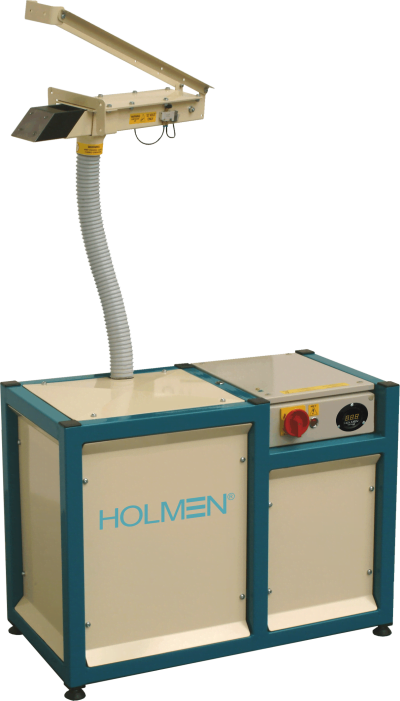
Holmen Pellet Durability Testers enable feed manufacturers to quantify pellet quality quickly and consistently.
Rather than relying on subjective assessments or assumptions based on process changes, operators receive an accurate measurement of how pellets will withstand the stresses encountered during handling, storage and transportation.
This information creates opportunities to optimise production processes with confidence.
Instead of continuously tightening specifications and adding cost, manufacturers can determine the precise point at which pellets achieve the durability required by the market.
The result is a more informed approach to decision-making, where quality targets are supported by evidence rather than habit.


Looking Beyond the Pellet Mill
A pellet’s quality is tested long after it leaves the press.
Transfer systems, elevators, conveyors, storage facilities and transport vehicles all expose pellets to conditions that can generate fines. Any breakdown during this journey represents a loss of value and can ultimately affect customer satisfaction.
Routine durability testing allows potential problems to be identified before product reaches the farm. Small changes in raw materials, conditioning efficiency, die performance or grinding specifications can be detected quickly, helping maintain consistency across production runs.
This turns durability testing from a simple quality-control exercise into a practical business tool.
Bringing Teams Together
One of the biggest challenges in feed manufacturing is that different departments often measure success differently.
Production teams focus on throughput, efficiency and operational costs. Nutritionists focus on feed structure, digestibility and animal performance. Quality personnel focus on consistency and product standards.
All of these priorities are valid, but they can sometimes pull decision-making in different directions.
Holmen Pellet Durability Testers provide a common point of reference. By putting reliable pellet quality data in front of every stakeholder, decisions can be made with a clearer understanding of the trade-offs involved.
The conversation shifts from opinion to evidence.
Building Profitability Through Better Information
The most profitable feed mills are not necessarily those producing the hardest pellets, the finest grinds or the most aggressive processing conditions.
They are the mills that understand how manufacturing costs, pellet quality and nutritional objectives interact.
By providing rapid and repeatable measurements of pellet durability, Holmen testing helps manufacturers identify the sweet spot between production efficiency and product performance. The result can be lower operating costs, improved process control and greater confidence that resources are being spent where they generate genuine value.
In a competitive industry, that level of insight can make the difference between merely producing pellets and producing pellets profitably.
For further reading on this topic, we can recommend the follow detailed article:
Article: – Pellet quality in a compound feed factory – Thoughts from Feed Design Lab
For more information contact TEKPRO today by completing the form below, or email info@tekpro.com
